Sunday, December 12, 2021
Monday, February 22, 2021
Dr. William Taft "Bulldog" Stuart
Greetings everyone,
in case you didn't know, my good friend and your colleague, Bill Stuart, passed away last month. Due to the COVID hoax he died alone. His wife was only allowed to se him in the last stages.
Bill was my good friend and mentor, I will miss him greatly.
My introduction to Music, Neurology, and Evolution, Unit one of my Music and Humanity course.
Gentlemen,
I don't know if any of you still receive notifications from this Vlog we were part of years ago, but although I went on to work on my innovation, the Aurora Bright Bike [Aurorabrightbikes.com], after 4 patents later, and going on my 7th, and hopefully last, prototype, I have never abandoned my music and neurology project.
This video is an introduction to Music, Neurology, and Evolution, Unit 1 of my Music and Humanity course.
I put our project to good work here and expanded on that work quite a bit.
Monday, April 27, 2020
Sunday, December 2, 2018
This is close to what I envisioned
https://www.facebook.com/neofect/videos/474889796364392/
https://home.neofect.com/blog/portable-home-therapies-for-stroke-rehab-anywhere
Tuesday, October 4, 2016
What I have been Doing these Past 3 Years!!
Time is running away with me....this was a some time ago, and our project even longer!
If I am successful I can fund my own experiments, publish them, and take the project from there. I haven't forgotten the Music and Neurology project at all!
Thursday, October 16, 2014
LATE UPDATE BUT IMPORTANT
Gentlemen,
If you peruse through the articles on the webpages below you will see that the work we did is still spot-on track, and on the cutting edge.
Music therapy today is, as I said, superficial and nostalgia based. What I have been proposing takes the cyclic characteristics of musical stimulus into the deeper parts of the brain- where they are already KNOWN to have real effects. It is my intimate knowledge of the Internalized Musical Cyclical Forms (IMCFs), my knowledge of semiotics, and my research into neurology, that has afforded me the insights I've arrived at.
What you will note below is that DBS (Deep Brain Stimulus) is an invasive surgical approach to achieve the very same goals that I suggested can be obtained through a new kind of musical therapy based upon the guided use of the IMCF. Pulsations, or cycles, are the key.
It is also possible that the DBS approach combined with my IMCF approach could work together.
Either way- the first step is to conduct the experiments that I proposed in my summary. I was going to use the 10K seed money to purchase a portable EEG system that interfaces with a computer. But I found that I had to be a licensed neurologist to even buy one. Finding a practicing biofeedback neurologist to partner with also proved problematic due to the fact that they all are were struggling to make ends meet themselves.
Nonetheless as this article reveals, the Brain Machine Interface field is also advancing:
http://www.ncbi.nlm.nih.gov/books/NBK3890/
I am right at the cusp of both advancing fields: DBS and BMI. I can provide a key element in the puzzle that both fields are working on.
Below are relevant information on DBS:
http://en.wikipedia.org/wiki/Deep_brain_stimulation
If you peruse through the articles on the webpages below you will see that the work we did is still spot-on track, and on the cutting edge.
Music therapy today is, as I said, superficial and nostalgia based. What I have been proposing takes the cyclic characteristics of musical stimulus into the deeper parts of the brain- where they are already KNOWN to have real effects. It is my intimate knowledge of the Internalized Musical Cyclical Forms (IMCFs), my knowledge of semiotics, and my research into neurology, that has afforded me the insights I've arrived at.
What you will note below is that DBS (Deep Brain Stimulus) is an invasive surgical approach to achieve the very same goals that I suggested can be obtained through a new kind of musical therapy based upon the guided use of the IMCF. Pulsations, or cycles, are the key.
It is also possible that the DBS approach combined with my IMCF approach could work together.
Either way- the first step is to conduct the experiments that I proposed in my summary. I was going to use the 10K seed money to purchase a portable EEG system that interfaces with a computer. But I found that I had to be a licensed neurologist to even buy one. Finding a practicing biofeedback neurologist to partner with also proved problematic due to the fact that they all are were struggling to make ends meet themselves.
Nonetheless as this article reveals, the Brain Machine Interface field is also advancing:
http://www.ncbi.nlm.nih.gov/books/NBK3890/
I am right at the cusp of both advancing fields: DBS and BMI. I can provide a key element in the puzzle that both fields are working on.
Below are relevant information on DBS:
http://en.wikipedia.org/wiki/Deep_brain_stimulation
Deep brain stimulation (DBS) is a neurosurgical procedure involving the implantation of a medical device called a brain pacemaker, which sends electrical impulses, through implanted electrodes, to specific parts of the brain (brain nucleus) for the treatment of movement and affective disorders. DBS in select brain regions has provided therapeutic benefits for otherwise-treatment-resistant movement and affective disorders such as Parkinson's disease, essential tremor, dystonia, chronic pain, major depression and OCD.[1] Despite the long history of DBS,[2] its underlying principles and mechanisms are still not clear.[3][4] DBS directly changes brain activity in a controlled manner, its effects are reversible (unlike those of lesioning techniques), and it is one of only a few neurosurgical methods that allow blinded studies.[citation needed]
The Food and Drug Administration (FDA) approved DBS as a treatment for essential tremor in 1997,[citation needed] for Parkinson's disease in 2002,[5] dystonia in 2003,[6] and obsessive-compulsive disorder (OCD) in 2009.[7] DBS is also used in research studies to treat chronic pain and has been used to treat various affective disorders, including major depression; neither of these applications of DBS have yet been FDA-approved. While DBS has proven helpful for some patients, there is potential for serious complications and side effects.
http://www.hindawi.com/journals/pd/2010/189371/
Case Report
Placement of the Internal Pulse Generator for Deep Brain Stimulation in the Upper Back to Prevent Fracture of the Extension Wire Due to Generator Rotation: Case Report
Department of Neurosurgery, New York Medical College, Valhalla, NY 10595, USA
Received 14 June 2009; Revised 11 October 2009; Accepted 8 December 2009
Academic Editor: Francisco Grandas
Copyright © 2010 Ankur Garg et al. This is an open access article distributed under the Creative Commons Attribution License, which permits unrestricted use, distribution, and reproduction in any medium, provided the original work is properly cited.
http://neurosurgery.ucsf.edu/index.php/movement_disorders_parkinsons.html
FAQ for Patients: Deep Brain Stimulation for Parkinson's Disease
Neurosurgeons: Philip A. Starr MD, PhD; Paul S. Larson MD
Neurologists: Jill Ostrem MD; Alec Glass MD; William J. Marks, Jr. MD
Nurses: Monica Volz RN; Robin Taylor RN; Susan Heath RN
Research Coordinator: Jamie Grace
Neurologists: Jill Ostrem MD; Alec Glass MD; William J. Marks, Jr. MD
Nurses: Monica Volz RN; Robin Taylor RN; Susan Heath RN
Research Coordinator: Jamie Grace
As you can see: pulse, is just another word for cycle. Stimulating the deep brain with controlled frequencies and vibrations is the key. The IMCF allows the patient to actually participate in this process rather than remain a passive recipient of static applications. Knowledge of IMCFs could also guide the pulsing stimulus of the DBS technique so that the pulses are not just linear, but cyclical- that is, the pulses themselves would be linked to longer(slower), and shorter (faster) pulsations: cycles within cycles.This is a "musical" component that so far has been lost on the practitioners within both fields.
Sunday, August 24, 2014
Tuesday, June 4, 2013
Memento Book for the Project Participants
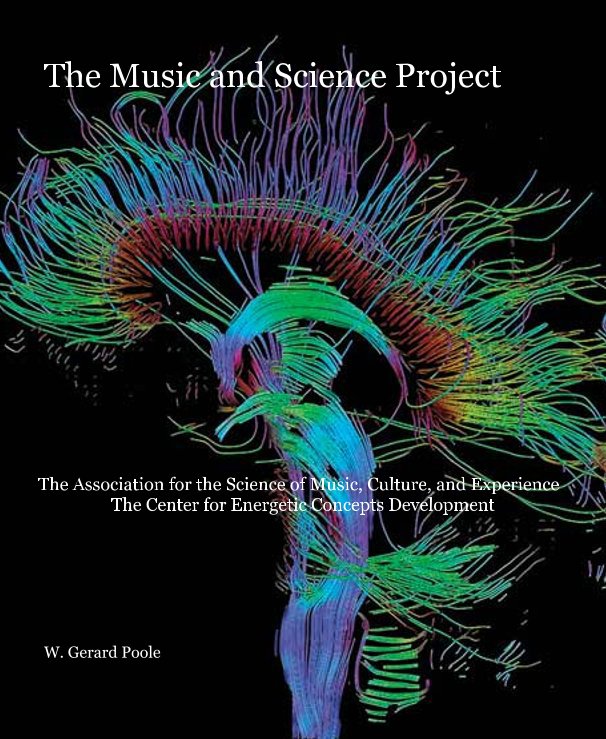
The Music and Science Project by W. Gerard Poole | Make Your Own Book
Hello everyone,
I'll be sending copies out. Thank you all so much again for your support and participation in this project. Now it's up to me to take it to the next step.
Hello everyone,
I'll be sending copies out. Thank you all so much again for your support and participation in this project. Now it's up to me to take it to the next step.
Friday, February 22, 2013
Small Business Grants
Hello Everyone,
Just an update:
I'm currently applying for a Small Business Grant, in conjunction with my Father's company El Poco Inc., for conducting the three experiments I outlined in the project summary. I'm hoping for the best. I am increasingly convinced that with the latest developments in Bionics and Neurology, the therapeutic approach outlined in the summary of our project is going to be the future for music therapy (or strategic sound engineering entrainement).
With these new strategies we can hopefully facilitate a faster adaptation, on the part of the patient, to the bionic limb. This is something that I have not even found a precedence for but that I am convinced will be an extremely useful tool, especially for the wounded veterans. This project, after all, in keeping with Dr. Anand's vision, was to make a contribution to the many wounded warrior programs.
Just an update:
I'm currently applying for a Small Business Grant, in conjunction with my Father's company El Poco Inc., for conducting the three experiments I outlined in the project summary. I'm hoping for the best. I am increasingly convinced that with the latest developments in Bionics and Neurology, the therapeutic approach outlined in the summary of our project is going to be the future for music therapy (or strategic sound engineering entrainement).
With these new strategies we can hopefully facilitate a faster adaptation, on the part of the patient, to the bionic limb. This is something that I have not even found a precedence for but that I am convinced will be an extremely useful tool, especially for the wounded veterans. This project, after all, in keeping with Dr. Anand's vision, was to make a contribution to the many wounded warrior programs.
Tuesday, July 10, 2012
Project Summary
[Well gentlemen (and Ms Ania, of course), this wonderful project is finally coming to a close and I thank you all so much for your support. I am in the process of producing a booklet for everyone involved. The booklet will contain printed pages of the Blog posts, photos, and all the produced materials. Included on the back covers will be an attached CD that will have the final summary (shown below) and both of the Power Points. I hope you enjoy them, they should be ready within three weeks. Again, thank you all so much, and especially Dr. Anand.]
A Preliminary Study Toward a New
Approach to the Neurology of Music for Therapeutic Purposes
By
W. Gerard Poole,
Ph.D.
For the
Center for Energetic
Concepts Development
Dr. Davinder Anand,
Director
and
Dr. Michael G. Pecht
Director of CALCE
Center for Life Cycle Engineering
In Conjunction with
the
Association for the
Exploration of Music, Culture, and Science
And in consultation
with
William Taft Stuart,
Ph.D.
Professor of
Anthropology, UMD at College Park
This preliminary investigation is about Music
Therapy and Brain Plasticity. It asks a basic question: Can there be a real,
significant, fruitful relationship between the two? This preliminary survey of
the field suggests strongly that there could be, and that the relationship
between the two might potentially revolutionize the field of music therapy. This
survey also strongly suggests that the fields of Ethnomusicology and Ritual
Studies can introduce compelling insights that will be useful to the field of
music therapy and to the phenomenon of brain plasticity.
The report involves three general subjects; (1) relevant
developments within the fields of brain research (brain plasticity),(2)
observations and analysis of specific music therapy applications, and (3) relevant
theories of music and evolution that suggest a new approach that the field of
music therapy might take.
Firstly, the paper discusses the general observation
that the most important group of facts to emerge over the last decade in regards
to brain research and music and neurology has to do with the concept of brain
plasticity. Two critical facts have emerged: first, that the brain is capable
of restructuring itself, and secondly, that this process continues throughout
the life of an individual (although it does diminish to some extent past late
childhood).
Secondly, this report covers some of the major
emergent facts that are relevant to the relationship between music and brain
plasticity. Two of the most important are: (1) that musical
processes (applied sound structures) can stimulate brain plasticity (generating
new cells) and (2) that music can also stimulate the innate powers of the brain
to restructure itself (increase connections between existing cells).
Furthermore, music practice can increase brain volume, predominantly within the
corpus colossus (that part of the midbrain through which the left and right
hemispheres coordinate with each other). These emergent facts have been shown
to be virtually conclusive though clinical studies that span roughly from the
mid-nineties to the present. Nonetheless the facts are subject to
interpretation as this report reveals.
A brief summary of specific theoretical models that link
music, the emotional spectrum, and evolution, are considered in order to
provide a foundational theory for how current music therapies might be
reformulated toward new direction. The chief authors considered are; Nils
Wallin (music, the emotional spectrum, brain capacity, and human consciousness);
Antonio Damasio (the neurology of the emotions and consciousness); Steven
Mithen (music, the corpus colossus brain mass, and cross-modular thinking
processes); Steven Levitin (the neurology of music and human social evolution);
Robert Jourdain (music and ecstasy) Robert Zatorre, and Isabel Peretz
(neurology of music, and cognition), J. Sloboda et al, (music and emotion); and
W. Gerard Poole (the Internalized Musical Form; relationships between musical
form, emotional mode, and ritual proliferation; music and ritual in relation to
the ecstatic experience).
It is proposed, based on the work of the above
authors, that proto-musical, and proto-ritual behaviors played critical roles
in the evolution of brain mass (new cell growth), brain capacity (more complex interconnections
between cells), and brain cross-modular processing (more complex interactions
between different parts of the brain), among late-hominids and early humans.
The aim of a music therapy then is to utilize innate fundamental relationships
between structured musical behaviors, the generation of structured sounds, and
the resultant neurological processes, to stimulate neurological changes within
the brain and the central nervous system.
In a sense then, the proposed therapy would stimulate the neurological
processes of the brain’s own evolutionary path. The difference being that
rather than stimulating the brain toward generating new capacities, the brain
would be stimulated to regenerate capacities it already possessed.
Critical to the issue of stimulating brain
plasticity are relationships between music, the emotions, endorphins, dopamine,
the issue of inhibition and dormancy versus cell awakening, etc. The fact that
music (or structured sound) can stimulate plasticity through stem cell growth
is the immediate issue. However, music can also suppress brain activity, which
is also critical.
Examples of
current nostalgic, or mood enhancement music therapy, as well as emotion and
memory based therapies are examined. These techniques tend to rely primarily on
the referential aspects of music, those qualities that it shares with language.
However, this study finds that changes from one state of mind, or one emotional
state to another, by using music to stimulate references, can only facilitate
other therapeutic techniques, and while it is also acknowledged that the link
between emotions and memory can be useful in the course of a therapy, in the
long run these kinds of music therapies cannot repair brain damage or even effectively
treat lesser ailments.
A central theoretical issue addressed by
this paper is the proposition that there is a basic misunderstanding of what is
occurring within the Broca area of the brain when processing music and
language. It is proposed that music harmony has nothing to do
with linguistic syntax. This issue represents a fundamental misunderstanding
about the nature of musical processes that is still prevalent among music
therapists and music neurologists.
Three experiments are proposed that would contribute
toward a concrete delineation between nostalgic, or referential musical
practices that characterize the current state of music therapy, and a new
applied structured music therapy that could potentially work directly on the
brain: music structure, performance structure, brain structure
Monday, June 11, 2012
Of Even Further Interest
I have left the the abstract article below (I deleted the body of the article that I had posted almost in its entirety earlier) The experiments that I am interested in conducting as a result of the study commissioned by the grant will be greatly facilitated by this rapidly evolving technology.
Abstract
We report on the measurement of somatosensory-evoked and spontaneous magnetoencephalography (MEG) signals with a chip-scale atomic magnetometer (CSAM) based on optical spectroscopy of alkali atoms. The uncooled, fiber-coupled CSAM has a sensitive volume of 0.77 mm3 inside a sensor head of volume 1 cm3 and enabled convenient handling, similar to an electroencephalography (EEG) electrode. When positioned over O1 of a healthy human subject, α-oscillations were observed in the component of the magnetic field perpendicular to the scalp surface. Furthermore, by stimulation at the right wrist of the subject, somatosensory-evoked fields were measured with the sensors placed over C3. Higher noise levels of the CSAM were partly compensated by higher signal amplitudes due to the shorter distance between CSAM and scalp.
© 2012 OSA
Intersting
A study at the University of Maryland has the potential to help movement-impaired people to control the operation of artificial limbs or computer systems without having to undergo extensive training or invasive surgery. The researchers have successfully reconstructed 3D hand movements by decoding electrical brain signals picked up from sensors placed on the scalps of volunteers.
The University of Maryland researchers decoded brain signals from five volunteers asked to perform a series of random hand movements while hooked up to an electroencephalography (EEG) machine via 34 sensors around their scalps. The recorded electrical activity data was then translated and reconstructed into 3D hand movements by the team.
The researchers discovered that the sensor placed over the primary sensorimotor cortex (which is linked to voluntary movement) appeared to offer more accurate information than the others. More useful data came from the sensor located above the inferior parietal lobule, an area associated with guiding limb movement.
Team leader Jose Contreras-Vidal said: "Our results showed that electrical brain activity acquired from the scalp surface carries enough information to reconstruct continuous, unconstrained hand movements."
The brain image (above left) depicts localized sources of movement-related brain activity overlaid onto a typical magnetic resonance imaging (MRI) structural image. This activity is predictive of hand movement that will occur 60ms in the future (this timing reflects the cortical-spinal delays in the transmission of information from the central nervous system to the periphery). The middle image shows the corresponding scalp activation map of the best 34 sensors that were used to reconstruct the hand movements. This image shows a large individual contribution of a sensor (CP3) centered over left central and posterior areas of cortex (the hand movements were performed with the dominant right hand). The right figure depicts the mean finger paths for center-out-and-back movements performed by a participant in the study led by University of Maryland researchers.
It is believed that the non-invasive, portable technique could be of use to those with severe disabilities and allow them to operate such things as a motorized wheelchair, a prosthetic limb or a robotic device using only a headset containing scalp sensors and the power of thought. The findings may also result in improvements to existing EEG-based systems which facilitate computer interaction by translating brain activity so that current extensive training regimes can be reduced.
Wednesday, May 30, 2012
Hello everyone,
I have been bought up in another series of deadlines. I also realized that the final summary and the body of the report needed some work before I would want to turn them in as final.
So it's taking a little longer than anticipated but I want to turn something in that del good about.
Thanks for your patience!
WGP
I have been bought up in another series of deadlines. I also realized that the final summary and the body of the report needed some work before I would want to turn them in as final.
So it's taking a little longer than anticipated but I want to turn something in that del good about.
Thanks for your patience!
WGP
Friday, May 11, 2012
http://www.musicianbrain.com/papers/20111226_npr_MIT.mp3
Greetings everyone again,
the above link has some news for us. This is another example of the Music Intonation Training method that we looked in my presentation. With a younger patient the results were much better. What I am suggesting is that if the therapy moves towards the internalization of musical cyclical forms, the results should be far better than what results from just the singing of phrases. But first I need to create the spectrum "map" to give credibility as to why I think this might be so. Otherwise it would be difficult to persuade an untested approach for someone who truly was in need of therapy.
Greetings everyone again,
the above link has some news for us. This is another example of the Music Intonation Training method that we looked in my presentation. With a younger patient the results were much better. What I am suggesting is that if the therapy moves towards the internalization of musical cyclical forms, the results should be far better than what results from just the singing of phrases. But first I need to create the spectrum "map" to give credibility as to why I think this might be so. Otherwise it would be difficult to persuade an untested approach for someone who truly was in need of therapy.
Hello everyone,
I want to give my sincerest thanks to Dr. Anand and Dr. Pecht for taking from their valuable time to sit through my presentation and give their thoughtful critique. I hope they were satisfied with the results. This has been one of the most important events in my fledgling academic career and I hope I will be able to continue along the research lines that we have laid out in this project.
I also want to thank Dr. Stuart for his support throughout this project and of course I wish he had been able to attend the presentation and give his valuable insights- however, I will send him the materials and we will undoubtedly go over them in his office at the Town Hall.
Thanks again everyone, this has been a great experience for me, and I hope it was of some value to all of you as well,
W. Gerard Poole
I want to give my sincerest thanks to Dr. Anand and Dr. Pecht for taking from their valuable time to sit through my presentation and give their thoughtful critique. I hope they were satisfied with the results. This has been one of the most important events in my fledgling academic career and I hope I will be able to continue along the research lines that we have laid out in this project.
I also want to thank Dr. Stuart for his support throughout this project and of course I wish he had been able to attend the presentation and give his valuable insights- however, I will send him the materials and we will undoubtedly go over them in his office at the Town Hall.
Thanks again everyone, this has been a great experience for me, and I hope it was of some value to all of you as well,
W. Gerard Poole
Wednesday, May 9, 2012
Thursday, April 19, 2012
Greetings Everyone,
Again, please excuse the long periods of silence, but its not reflective of a lack of progress.
I want to propose the second week in May for the final presentation. If you could let me know what days are preferable, and what times, I'll announce the day and time.
I think you are going to be pleased with the value and contribution that we will have made through our little endeavor and I look forward to presenting the results to you all.
Thanks,
WGP
Again, please excuse the long periods of silence, but its not reflective of a lack of progress.
I want to propose the second week in May for the final presentation. If you could let me know what days are preferable, and what times, I'll announce the day and time.
I think you are going to be pleased with the value and contribution that we will have made through our little endeavor and I look forward to presenting the results to you all.
Thanks,
WGP
Sunday, March 11, 2012
State of the Project
Greetings Everyone,
Below is the experiment I was referring to. There are several interesting aspects to this experiment and its results. One of the salient points that I will point out in the presentation is that Dr. Limb does not, in my opinion, actually understand why he got the results he did (which he admits he probably doesn't). This is where the collaboration between Ethnomusicology and the neurology of music will prove to be very fruitful, especially when it takes into account the internalized cyclical musical form (what I am calling ICMFs).
Subscribe to:
Posts (Atom)